Ia dibuat dengan PLA-Base PLA, Biodegradable Sepenuhnya Ciri: 1. Produk kompos perindustrian 2. ...
Baca lebih lanjut
A knitting mill can receive two lots of 150D/48F recycled polyester filament in the same week. Both arrive with the same rPET label and the same nominal denier. One runs through a 28-gauge circular machine without a single filament break; the other leaves needle lines, tight courses and a faint shade band every few meters. The variable is rarely the word "recycled" on the packing list. It is the intrinsic viscosity of the chip, the contamination level in the flake, and the moisture the polymer picked up between drying and spinning.
So here is the position up front: recycled polyester fabric can match virgin polyester on tenacity, shrinkage and dyeing consistency, but only when the fiber specification is written in measurable values and the feedstock route is traceable. Buyers who treat rPET as one commodity grade are the ones who meet broken filaments, unexpected shade variation and finishing surprises in the middle of a production run.
Recycled polyester is not a different polymer. It is polyethylene terephthalate that has already lived one life, as a bottle, a film or pre-consumer spinning waste, and has then been washed, flaked and re-melted, or chemically broken back into monomers before being spun into staple fiber or filament yarn. Because the chemistry is identical, rPET fabric can be dyed, heat-set, brushed, calendered and laminated on the same lines as virgin polyester.
The route used to recover the polymer matters more to a fabric program than the recycling percentage printed on a certificate.
| Route | Feedstock accepted | Typical fiber outcome | Buyer watch-outs |
|---|---|---|---|
| Mechanical | Clean, light-colored bottles and pre-consumer fiber waste | IV after re-melt usually 0.60-0.68 dL/g; slight grey or yellow tint | Color sorting, PVC and PLA contamination, cumulative heat history |
| Chemical | Mixed color, multilayer and lower-grade waste | Close to virgin IV and color after decolorizing | Higher cost per kilogram, fewer commercial lines, longer lead times |
Most fabric on the market today is mechanically recycled. That is entirely workable, as long as the specification compensates for what mechanical recycling does not remove.
A purchase order that says only "recycled polyester, 150D" leaves the decisive variables open. The values below are the ones that surface first when a trial fails, and they are the ones worth locking into a technical agreement rather than a marketing sheet.
| Parameter | Typical rPET target | What it controls |
|---|---|---|
| Intrinsic viscosity (IV) | 0.62-0.68 dL/g filament; 0.60-0.66 staple | Tenacity, spinning breaks, knitting efficiency |
| Tenacity | 3.2-4.0 cN/dtex staple; 3.5-4.5 cN/dtex FDY | Fabric strength, pilling, abrasion resistance |
| Elongation at break | 20-35 percent | Draw behavior, crimp stability, texturing |
| Boiling water shrinkage | 2-8 percent depending on process | Dimensional stability after dyeing and finishing |
| Denier evenness (CV) | Under 1.5 percent filament; under 2.5 percent staple | Dye streaks, barré, course-to-course variation |
| Moisture before spinning | Below 50 ppm | Hydrolysis and IV loss in the barrel |
| Spin finish (OPU) | 0.3-0.8 percent | Static, fiber cohesion, carding and opening |
These are ranges, not absolutes. A 0.64 dL/g chip that was dried properly will outrun a 0.68 dL/g chip that sat in humid storage for three weeks, which is why lot-level data is worth more than a single certificate renewed once a year.
Recycled polyester reaches fabric in three principal forms, and the choice usually follows the downstream process rather than the recycling claim itself.
Micro filament variants deserve a separate conversation when the target is a dense, soft hand feel with good drape at lower fabric weight. They also tend to hide the slight tint that mechanically recycled polymer carries, because the finer filaments scatter light more evenly across the surface.
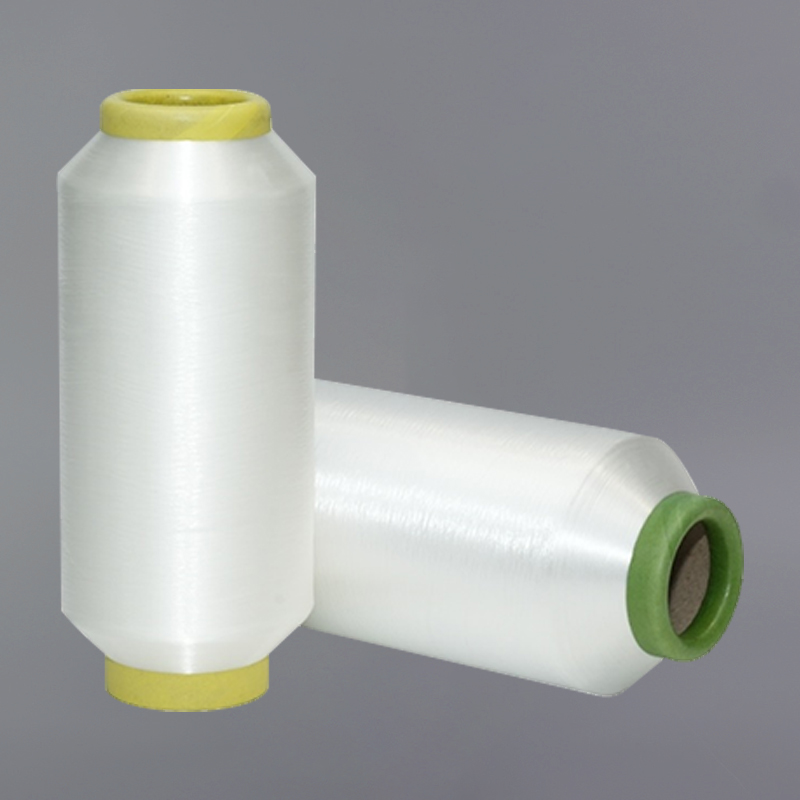 Polyester Micro Filament YarnIt is made with polyester, we can special produce micro filament, DPF can less 0.5View Product →
Whichever form you choose, confirm the yarn count system early. A 75D/72F specification means something very different to a texturing line than to a warp knitter, and mismatched count expectations are a common reason a sample passes while bulk production does not.
Four mechanisms explain most of the variability buyers see between shipments, and all four are addressable with data rather than guesswork.
For a structured comparison of grades and purchasing criteria, see this guide to recycled polyester fiber grades and buying criteria, which walks through the same variables from a supplier-selection angle.
Recycling addresses where the polymer came from. It does not automatically deliver antistatic behavior, thermal bonding or biodegradation, and it is worth separating those requirements before the first sample is spun.
Permanent antistatic performance in polyester is normally achieved by compounding a conductive component into the polymer rather than by topically finishing the fabric. Because carbon-based additives are dark, these yarns are commonly supplied in grey or black, and that color constraint should be planned at the design stage instead of discovered at the dyehouse.
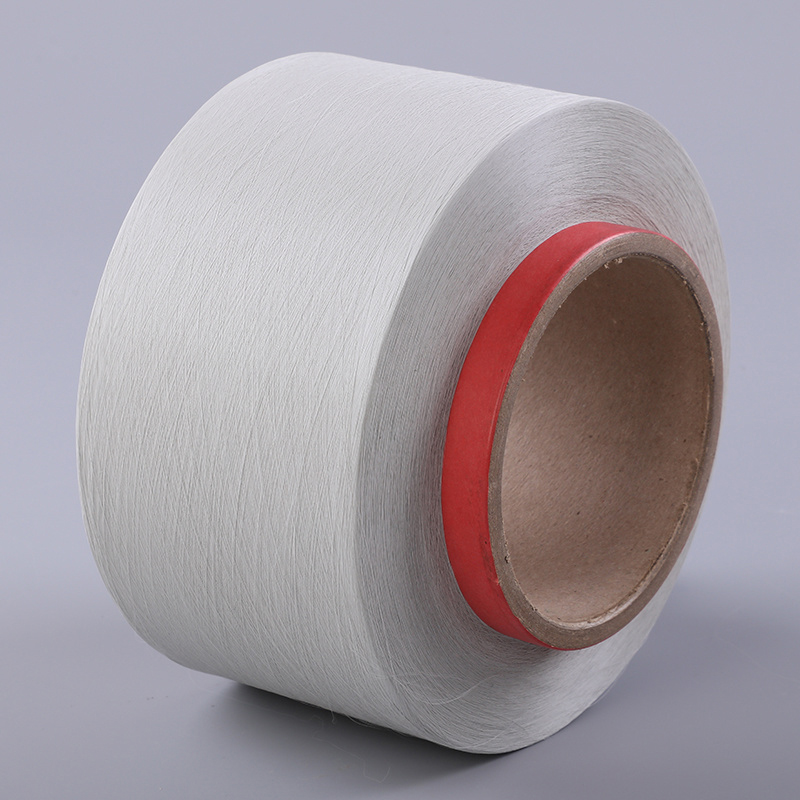 Anti Static PET Yarn Grey ColorCustomization & OEM ServiceView Product →
Low-melt sheath-core yarns bond at 85 °C or 110 °C and remove the need for adhesive films in some nonwoven and shoe-upper constructions. They are a functional addition to a recycled base rather than a replacement for it.
Where the end-of-life requirement is compostability rather than recycled content, PLA fiber is a different material family with its own processing window: lower dyeing temperatures, gentler drying, and no blending with conventional PET if certification is required.
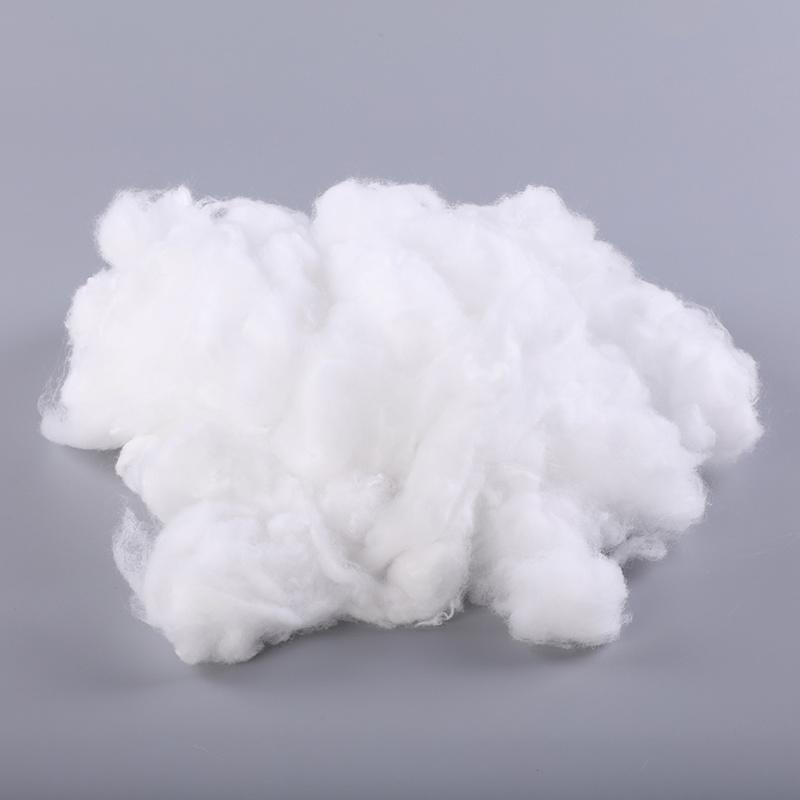 PLA Biodegradable Staple FiberCustomization & OEM ServiceView Product →
Keeping recycled and biodegradable claims in separate documents avoids the confusion that appears when a single specification sheet tries to cover both.
Recycled polyester performs predictably once the specification is quantified and the supplier can report data per lot. The harder question is whether the mill behind the fiber can adjust finish, crimp and viscosity targets inside a reasonable production window, because that flexibility is what turns a failed first trial into a successful second one.
GC FIBER (NanTong Global Chemical Fiber) has produced specialty and eco textile fibers since 2006, covering polyester micro filament, antistatic yarns, low-melt yarns and PLA biodegradable filament, staple fiber and nonwoven. The company works with customers on new material development rather than limiting the conversation to off-the-shelf grades. If a recycled program is caught between a cost target and a knitting performance target, send the target specification for review and ask for lot-level fiber data to be issued together with the sample.
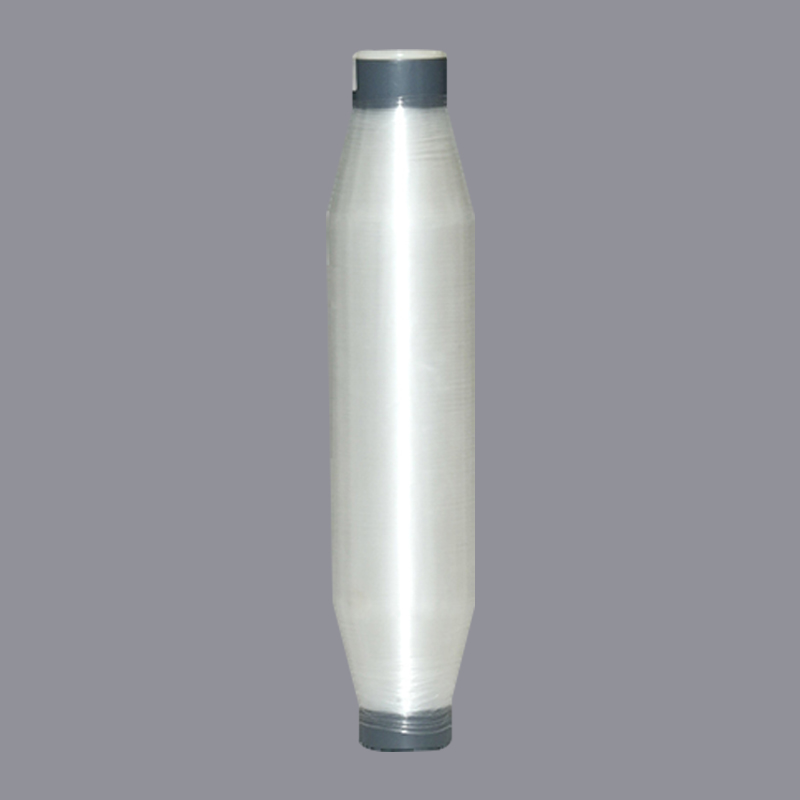
Ia dibuat dengan PLA-Base PLA, Biodegradable Sepenuhnya Ciri: 1. Produk kompos perindustrian 2. ...
Baca lebih lanjut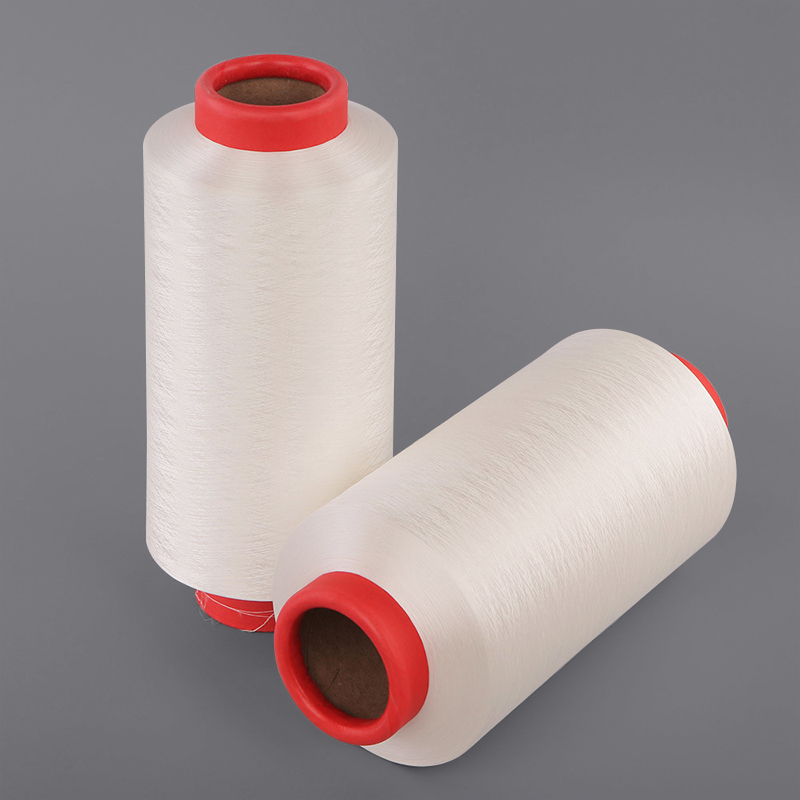
Ia dibuat dengan poliester, kita boleh menghasilkan benang terbaik, 7D dan 10D DTY boleh dilaksanakan di kilang kami....
Baca lebih lanjut
Ia dibuat dengan poliester, kita boleh menghasilkan filamen mikro khas, DPF kurang 0.5 Ciri: 1. Filamen...
Baca lebih lanjutA knitting mill can receive two lots of 150D/48F recycled polyester filament in the same week. Both arrive with the same rPET label and the same nominal denier...
Baca MoreBotol PET 500 mL mempunyai berat kira-kira 9 gram sebaik penutup dan labelnya tertanggal. Bahagian atas rajutan pertengahan berat boleh mengambil 250 hing...
Baca MoreApabila anda memilih benang untuk produk yang akan menghadapi air masin, geseran berat, atau kelembapan berbulan-bulan, poliester dan nilon biasanya muncu...
Baca MoreSila isi borang di bawah dan pasukan kami akan menghubungi anda secepat mungkin.
Addres: No.66 Qiaogang Road, Haian, Nantong City, Wilayah Jiangsu, China
E-mail: admin@gcfiber.com
Copyright © Serat GC All Rights Reserved.
